

Dec 13, 2024
ฝากข้อความ
for your production process is a crucial decision that impacts efficiency, cost-effectiveness, and product quality. The ideal reactor size depends on various factors, including production volume, reaction kinetics, heat transfer requirements, and available space. Generally, for small-scale operations or pilot projects, reactors ranging from 1 to 50 liters are suitable. Medium-scale productions typically utilize reactors between 100 to 1000 liters, while large industrial processes may require reactors exceeding 10,000 liters. It's essential to consider future scalability and flexibility in your selection. Consulting with experienced chemical equipment manufacturers like ACHIEVE CHEM can provide valuable insights into selecting the optimal used SS reactor size for your specific needs, ensuring a balance between current requirements and potential growth.
|
The first step in selecting the appropriate size for a used ss reactor is to evaluate your production volume and batch size requirements. Start by analyzing your current production needs, taking into account both your immediate and long-term goals. Consider any anticipated growth in demand or changes in production schedules that could impact the volume of materials you need to process. Calculate the maximum batch size you expect to produce under normal operating conditions, but also factor in some additional capacity to accommodate fluctuations in demand or future expansion. It's typically recommended to choose a reactor size that allows for 70-80% fill capacity during regular operation. This not only ensures that the reactor can handle future growth but also maintains a safe margin to avoid overloading the system. Proper sizing helps optimize efficiency and ensures the reactor functions effectively under varying conditions. |
|
|
|
|

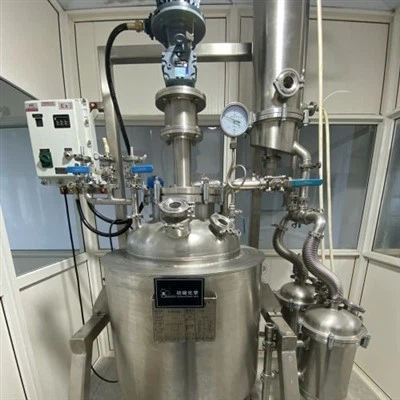
Heat transfer efficiency is a critical factor in many chemical processes, and it directly impacts the size of the used ss reactor needed. Larger reactors have a lower surface area-to-volume ratio, which can make temperature control more challenging. If your process requires precise temperature control or rapid heating and cooling, you may need to consider a reactor with a larger surface area or additional heating/cooling capabilities. This could influence the decision between a single larger reactor or multiple smaller units. Furthermore, advanced heat exchange systems, such as jacketed reactors or internal coils, can enhance thermal efficiency, allowing for more consistent temperature profiles. These systems may be especially valuable when dealing with exothermic or endothermic reactions that require careful thermal management to maintain product quality.
The mixing and agitation needs of your process can significantly affect the required reactor size. Some reactions may require intense mixing or high shear rates, which can be more difficult to achieve in larger vessels. In such cases, multiple smaller reactors or specialized agitation systems might be more suitable. Consider the viscosity of your materials, the presence of solid particles, and the desired mixing patterns when evaluating reactor size options. Additionally, for highly viscous or slurry-based reactions, incorporating advanced mixing technologies such as high-torque impellers or fluidized beds may be necessary to ensure uniformity and optimize reaction efficiency. These factors directly impact not only the reactor size but also the overall performance and energy consumption of the system.
Modern used ss reactor designs often incorporate modular and flexible features that allow for scaling up or down as production demands change. Some manufacturers offer reactor systems with interchangeable components, allowing users to modify capacity without replacing the entire unit. This flexibility can be particularly valuable for businesses experiencing growth or those with seasonal production variations. When selecting a reactor, consider options that provide scalability to accommodate future needs without significant additional investment. Furthermore, modular designs can reduce downtime during upgrades and facilitate easier maintenance, ensuring continuous production with minimal disruption. These adaptable systems also allow for better utilization of space and resources, making them cost-effective in the long run.
Scaling reactor size, either up or down, requires careful consideration of various process parameters. While linear scaling may seem straightforward, factors such as heat transfer, mixing efficiency, and reaction kinetics can change non-linearly with reactor size. When scaling up, it's essential to conduct pilot studies or work closely with experienced equipment manufacturers to ensure that the larger reactor maintains the desired performance characteristics. Scaling down may require adjustments to agitation speeds, heating/cooling systems, or even process chemistry to maintain product quality and efficiency. Additionally, smaller reactors may face challenges related to heat dissipation and achieving uniform temperature distribution, which can affect reaction rates and yield. Properly addressing these issues ensures that scaled-down operations still deliver consistent results, meeting production or research objectives. Furthermore, careful monitoring and optimization of scale-up or scale-down processes are crucial to avoid inefficiencies, reduce costs, and maintain the desired consistency of the final product.

https://www.achievechem.com/chemical-equipment/stainless-steel-reactor.html